FARMINGTON, N.M. — A fight over the future of the coal mine that fuels the Four Corners Power Plant, and supplies a large share of the Navajo Nation’s government budget, has moved to a formal appeal.
Two environmental groups are asking the U.S. Department of the Interior to reconsider a federal decision that would extend the life of the Navajo Mine in northwestern New Mexico, KNAU reported Monday. The mine is operated by Navajo Transitional Energy Company, or NTEC, which is owned by the Navajo Nation. The company answered the same day with a lengthy statement rejecting the groups’ central claims.
What the groups are challenging
In September, the federal Office of Surface Mining, Reclamation and Enforcement, part of Interior, approved what is known as the No Name Permit, named for the No Name Arroyo, a dry wash that runs through the area. KNAU reported that the approval covers about 9,042 acres and more than 500 million tons of coal, and that the agency described it as the largest amount of coal ever approved for extraction on Native American land in the U.S.
The appeal was filed by Tó Nizhóní Ání, a Navajo-led nonprofit that works with Indigenous communities affected by coal, and San Juan Citizens Alliance, a Durango, Colorado-based environmental group. According to KNAU, they argue that extending the mine could raise costs for ratepayers, pollute the air and groundwater, and force some Navajo families to relocate.
“The local impacted community has already borne so much impact from this industry,” Mike Eisenfeld, energy and climate program director for San Juan Citizens Alliance, told KNAU. He said a single public scoping meeting was not enough for a project of this size. Interior did not immediately respond to KNAU’s request for comment.
NTEC: ‘This is a Navajo decision’
In its statement, NTEC said the No Name Permit is not a new mine or a new lease. It said the permit area — 11,526 acres by the company’s count — lies entirely inside the original Navajo Mine lease the tribe granted in 1957, and that actual mining is still authorized only through separate surface-mining permits issued in five-year increments, each covering less than 30 million tons.
The company said the 500-million-ton figure came from a required air-modeling exercise in the environmental review that assumed 5 million tons a year, producing a “theoretical” century of mining that it says critics have treated as an approval. NTEC also said the review was not fast-tracked, that it gave 83 presentations to Navajo communities and collected 21 supporting resolutions, and that only three grazing permittees could potentially be affected.
The company said it contributes more than $120 million a year to the Navajo Nation and that mine revenue and royalties make up about 25% of the Nation’s general fund. “Decisions about Navajo resources belong to the Navajo Nation,” the statement said.
Why it matters in Arizona
The Navajo Mine’s only customer is the Four Corners Power Plant near Fruitland, New Mexico, operated by Arizona Public Service. KNAU reported that APS confirmed last week it signed a contract with NTEC that could keep the plant running until 2038, rather than closing by 2031 as originally planned.
That puts the appeal at the center of a larger debate across the Navajo Nation, which stretches into Arizona, New Mexico and Utah: how to weigh coal jobs and tribal revenue against health and environmental concerns. KNAU noted that retired Navajo coal miners in both states have said they suspect they have black lung disease from working at operations like the Navajo Mine.
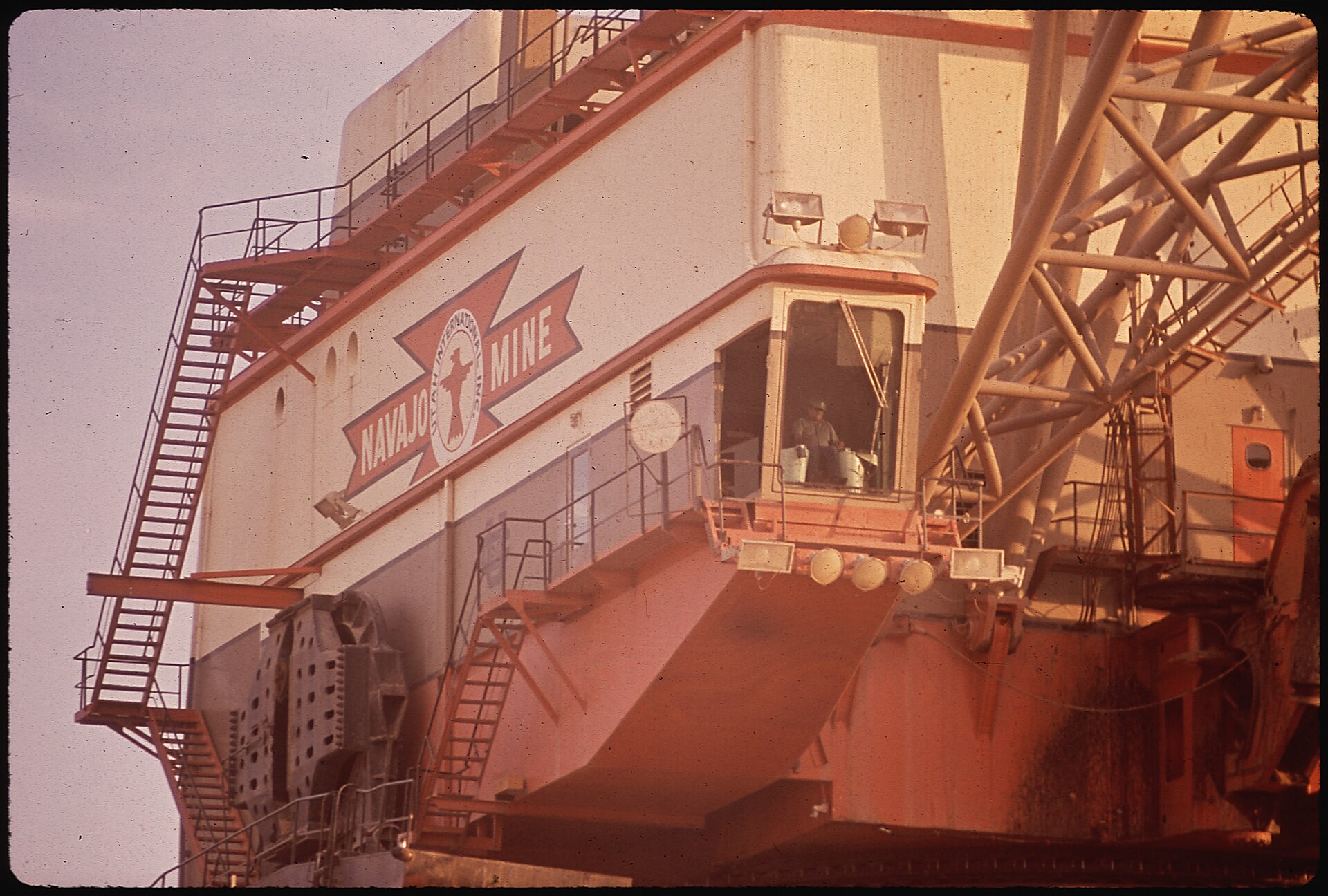
Photo: Lyntha Scott Eiler / U.S. National Archives via Wikimedia Commons (public domain). A dragline used in strip mining at the Navajo Mine, June 1972 (EPA Documerica project).
Sources: KNAU; Navajo Transitional Energy Company statement.
This article was produced with AI assistance and is based on reporting from KNAU and Navajo Transitional Energy Company statement.