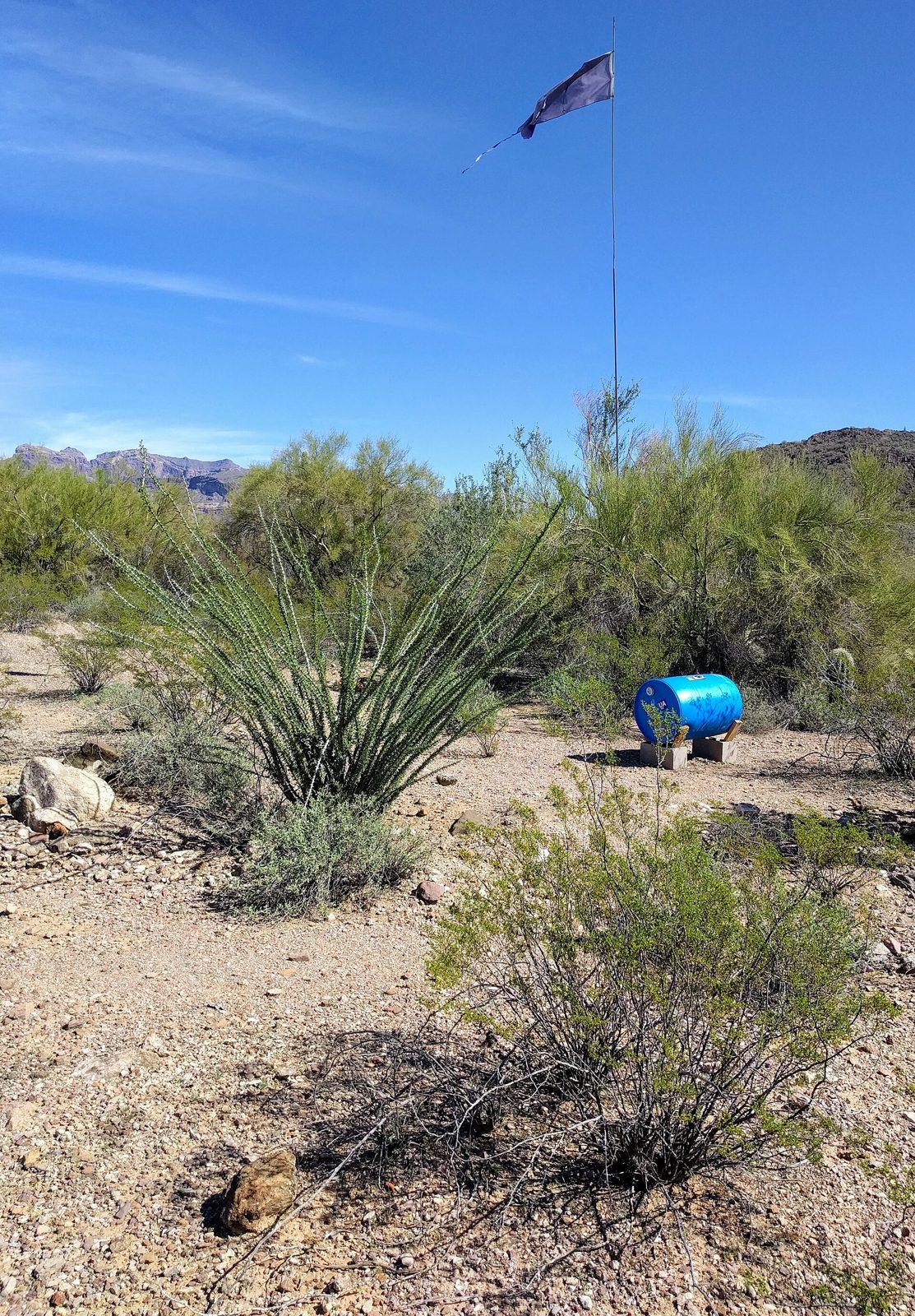
TUCSON — For a quarter-century, blue flags on tall poles have marked barrels of drinking water in some of the deadliest stretches of the Arizona borderlands. A dozen of those stations are now coming down after three federal agencies refused to renew the permits that allowed them on public land.
Humane Borders, a Tucson-based humanitarian group founded by Arizona faith leaders in 2000, said the Bureau of Land Management, the National Park Service and the U.S. Fish and Wildlife Service have all declined its permit requests this year. The group says the 12 stations represent about 30% of the permitted sites it normally runs, according to the Arizona Daily Star and TucsonSentinel.com. Its remaining stations sit on private or locally managed land, including near Arivaca, Avra Valley and Green Valley.
What the Park Service said
The most significant denial covers Organ Pipe Cactus National Monument in western Pima County. In a Sept. 28 letter signed by Superintendent Raquel Montez, the Park Service rejected a renewal covering six water barrels, the Arizona Daily Star reported. The permit expired Sept. 30. KJZZ reported it is the first time in more than two decades that the group’s Park Service permit has been denied.
According to the Star, the letter argued the stations push migrants “deeper into dangerous terrain with a false sense of security,” said the group had not consistently removed trash at the sites, and said keeping them would conflict with the monument’s work with federal partners on border security. Park Service spokeswoman Jessica Gardetto told TucsonSentinel.com the decision addresses “ongoing safety, resource protection, and law-enforcement concerns” near the international border.
Board chair Laurie Cantillo told KJZZ that Fish and Wildlife also denied stations in the Cabeza Prieta and Buenos Aires national wildlife refuges, and that BLM said permits in Ironwood Forest National Monument would not be renewed.
The group’s response
Executive Director Octavio Fuentes rejected the idea that water draws people into the desert. The group places stations where deaths have already happened, he told KJZZ, describing the barrels as following the deaths rather than leading migrants. Humane Borders says it will comply, with the remaining Organ Pipe barrels expected out by Oct. 30, and will look for replacement sites on private land.
The death toll
Border apprehensions are at historic lows, but the bodies keep turning up. Humane Borders, which tracks remains with the Pima County medical examiner, counts 86 sets of migrant remains recovered in Southern Arizona so far this year, after 102 last year, and 4,514 over the past 25 years. Sixteen have been found in Organ Pipe alone in 2026, the group says, and July was the deadliest month on the Arizona border in two years.
The group also notes the water is used by hikers, hunters and others. Last year, it says, a station helped a U.S. citizen who ran out of water while backpacking in Cabeza Prieta in triple-digit heat.
Photo: brewbooks via Flickr / Wikimedia Commons (CC BY-SA 2.0). File photo of a Humane Borders water station along Ajo Mountain Road in Organ Pipe Cactus National Monument.