




George Fenton, the British composer whose music swelled under David Attenborough’s ocean documentaries and drove Hollywood comedies like “Groundhog Day,” has died. He was 76.
His family said in a statement that he “passed away unexpectedly” on Monday, the BBC reported. No cause of death was given. He is survived by his wife, Amanda; his former wife, Jane; three children; six grandchildren; and, in his family’s words, “a life of music.”
His death came as a surprise: the BBC noted that Fenton had signed a new worldwide publishing deal just three weeks earlier and said at the time he was working on two film scores and a musical.
From Emmerdale to the Oscars
Fenton was born George Howe in Bromley, Kent, in 1949. He started on electric guitar at 7 and later studied church organ, but turned down music college to pursue the stage, according to the BBC. In 1968 he appeared in Alan Bennett’s first West End play, “Forty Years On,” adopting his mother’s maiden name to satisfy actors’ union rules. In the mid-1970s he had a recurring role on the soap “Emmerdale Farm.”
His composing career began in 1974 with music for a Royal Shakespeare Company production of “Twelfth Night.” Only a few films in, and still largely self-taught, he earned his first Oscar nomination for Richard Attenborough’s “Gandhi” (1982), shared with Ravi Shankar.
Four more nominations followed, for “Cry Freedom” — both its score and its title song, written with South African musician Jonas Gwangwa — “Dangerous Liaisons” and “The Fisher King,” according to The Guardian. Fenton had sung guide vocals on “Cry Freedom” that were kept in the final track, and he ended up performing it live at the Academy Awards. He later recalled being “virtually rigid with fear” singing before an audience of more than a billion people.
A sound that defined nature TV
For many viewers, Fenton’s best-known work was for the natural world. After scoring the BBC’s “The Trials of Life,” he composed the music for “The Blue Planet,” “Planet Earth” and “Frozen Planet,” winning BAFTA, Emmy and Ivor Novello awards for “The Blue Planet,” the BBC reported. He later turned those scores into live concert shows performed by orchestras around the world.
His film credits ran to more than 100 features, often in long partnerships with directors. He scored 18 films for Ken Loach, including the Palme d’Or winner “The Wind That Shakes the Barley” and “I, Daniel Blake”; all of Nicholas Hytner’s features, among them “The Madness of King George” and “The Lady in the Van”; and Nora Ephron’s “You’ve Got Mail.” He also scored Hollywood hits including “Sweet Home Alabama” and “Hitch,” The Guardian reported.
In Britain, his music was part of daily life: he wrote theme tunes for BBC news programs including the One, Six and Nine O’Clock News and “Newsnight,” as well as Radio 4’s “PM.”
‘The biggest kick you can get’
Fenton founded the Association of Professional Composers, was made a fellow of The Ivors Academy and was named a CBE for services to music in 2023. Asked on BBC Radio 4’s “Desert Island Discs” what he loved most about his work, he described the thrill of hearing musicians play something he had written: “For a composer, that’s the biggest kick you can get.”
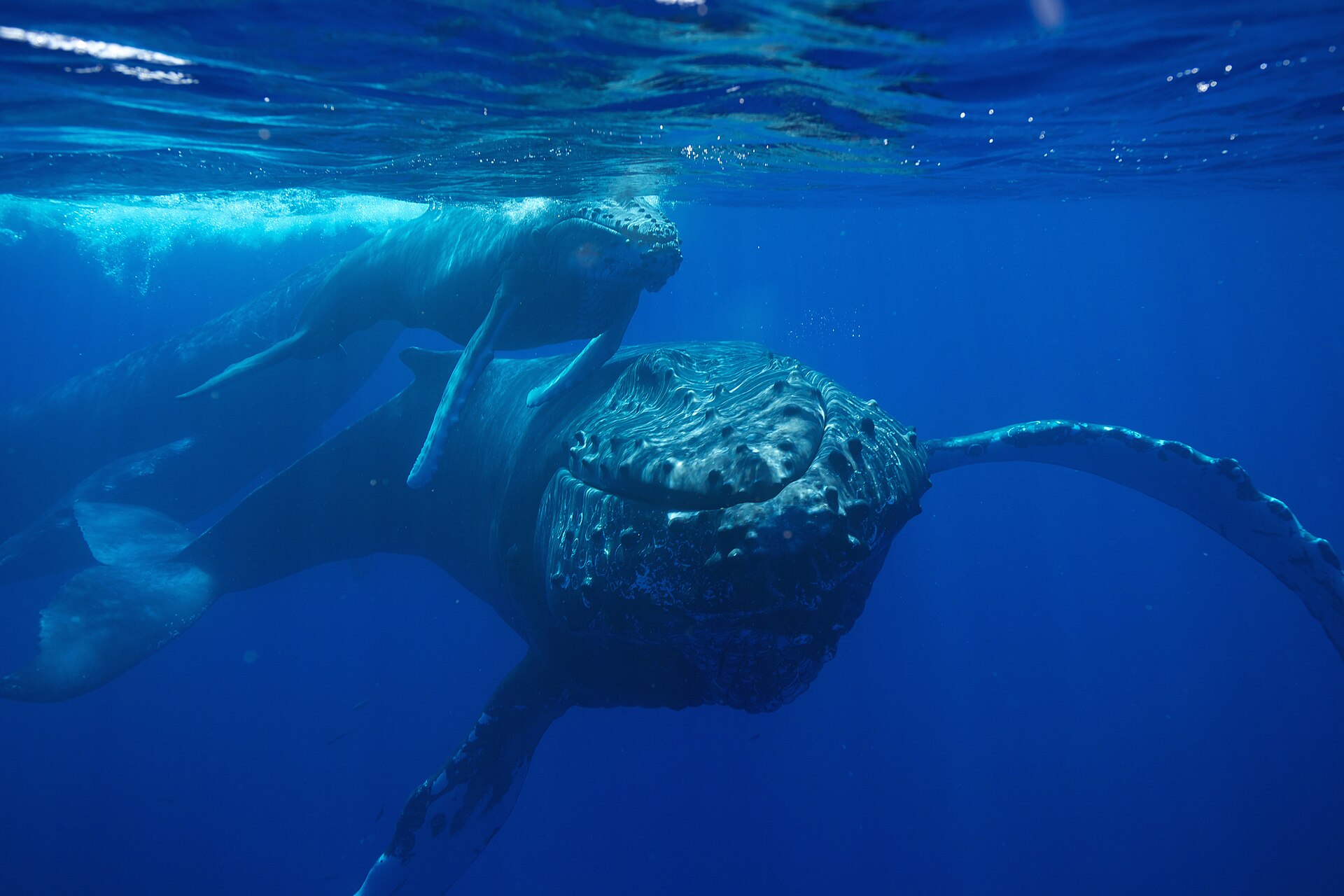
Photo: NOAA Hawaiian Islands Humpback Whale National Marine Sanctuary via Wikimedia Commons (public domain). A humpback whale and calf; Fenton scored the BBC ocean series ‘The Blue Planet.’
Sources: BBC News; The Guardian.
This article was produced with AI assistance and is based on reporting from BBC News and The Guardian.