





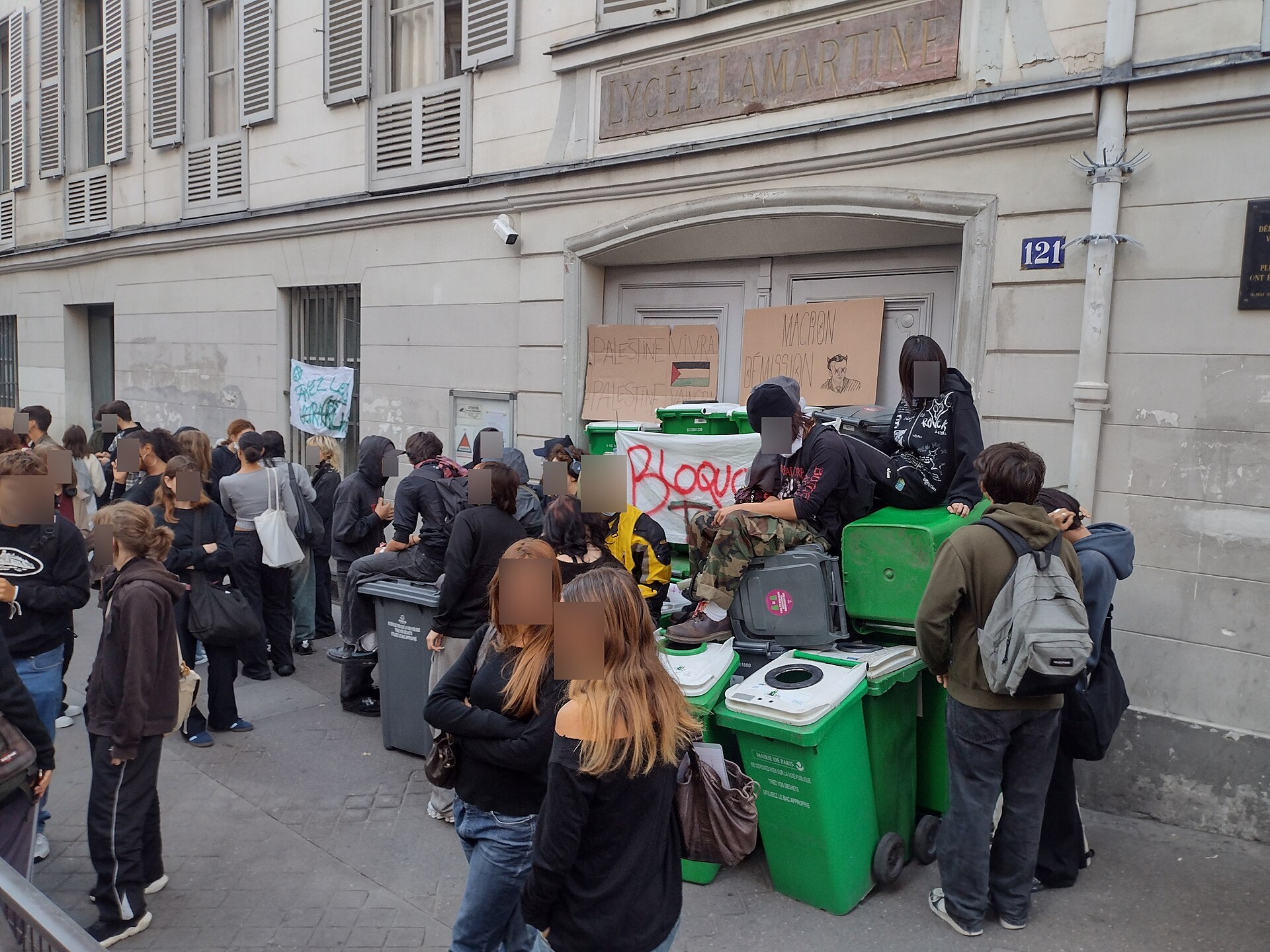
PARIS — A youth protest movement that began at a single suburban Paris high school last month spread across France on Tuesday, with students and some of the country’s largest unions staging a national day of action over the state of public schools.
A coalition of national unions, including the French Democratic Confederation of Labour (CFDT), France’s largest, called for students to march in Paris, Lyon, Marseille and about 30 other cities, the BBC reported. The teachers’ union SNES-FSU urged members to join. Adults including parents and union activists wore white armbands to form what local media described as a “buffer zone” around the teenagers.
What students want
Students are protesting overcrowded classrooms, run-down buildings and a shortage of teachers. Some told Al Jazeera they often have no teachers at all for subjects such as math and English, and that they were also marching in solidarity with students in poorer areas and France’s overseas territories.
The movement started with high school students and has since drawn in university students. Prime Minister Sébastien Lecornu announced measures on Sunday meant to “address the difficulties” faced by students and staff, promising “visible changes,” but the Union Syndicale Lycéenne, a major organizer, said the government had offered “nothing concrete,” according to the BBC.
A teenager’s injury raises the stakes
Anger grew after a 15-year-old lost his hand Monday in the northern city of Lens during a confrontation with police, the BBC and Al Jazeera reported. Accounts differ on whether he picked up a stun grenade fired by riot police or whether it landed near him; prosecutors said investigators have not yet established which. The case has been referred to the police internal affairs agency, which Al Jazeera said is now handling six investigations into serious injuries during the protests. His life is not in danger, the regional prefect said.
Education Minister Édouard Geffray called the injury a “tragedy” but said “ultraviolent elements” had infiltrated the movement. “From the beginning, I have called for dialogue, not for encouraging blockades,” he told France Info, according to the BBC.
Hundreds of schools disrupted
The Education Ministry said 589 schools were disrupted on Monday, down from 735 on Friday, Al Jazeera reported, citing Le Monde. France has about 3,700 public high schools. Geffray said 24 schools have been burned or ransacked and 78 teaching staff injured.
Arrest totals reported by news outlets range from about 5,000 to more than 6,000 people since late September, most of them teenagers. Amnesty International France has criticized what it called disproportionate force against minors, including baton strikes, tear gas and rubber-bullet launchers.
A political flashpoint
With a presidential election months away, the protests have become deeply politicized. Jean-Luc Mélenchon, leader and presidential candidate of the hard-left France Insoumise, called it the most powerful youth movement since 1968 and accused police of abuses, the BBC reported. Lecornu accused his party of being “irresponsible,” and National Rally leader Marine Le Pen said the unrest had become “riots organised by professionals” and called for a new anti-rioting law.
Marseille’s left-wing mayor, Benoît Payan, condemned “unacceptable violence” in his city while saying young people were “legitimately concerned” about their future.
Photo: Wyslijp16 via Wikimedia Commons (CC BY 4.0). Students gather during a blockade at Lycée Lamartine in Paris on Sept. 10, 2025; earlier file photo, not from the current protests.
Sources: BBC News; Al Jazeera.
This article was produced with AI assistance and is based on reporting from BBC News and Al Jazeera.