





MADRID — Spanish Prime Minister Pedro Sánchez on Monday called an early general election for Nov. 29, betting that public fury over an out-of-control housing market can rescue his weakened minority government.
The announcement came three days after Spain’s fragmented parliament voted down two emergency housing decrees amid nationwide protests, Reuters reported via CBC News and Ireland’s RTÉ. The next scheduled election was not due until 2027.
“We need to mobilise and win a much larger progressive majority in parliament, one that will allow us to overcome vested interests, deliver new social advances and continue transforming Spain,” Sánchez said in a televised address. He also acknowledged mistakes and unfulfilled promises, saying, “I also know that part of that social majority is dissatisfied today.”
The housing fight
The rejected measures would have automatically renewed tenancy contracts and restricted evictions of vulnerable tenants, according to RTÉ. They failed on Friday after the Catalan separatist party Junts, whose votes the government depends on, joined right-wing parties in opposing them, arguing they lacked rigor.
Housing anger had been building for more than a week, sparked by last month’s eviction of Maricarmen Abascal, an 87-year-old pensioner, from the Madrid flat she had lived in for decades after an investment firm bought the building and sought to raise her rent by 275%, campaigners said. The backlash led the new owners to let her return at a low rent. Tens of thousands marched in Madrid and other cities on Saturday, and more than 1,000 tents have filled Madrid’s Puerta del Sol, RTÉ reported.
Average rents in Spain have nearly doubled in a decade and asking prices for homes have risen about 90%, according to the real estate site Idealista.
Spain’s two largest unions said they will call a 24-hour general strike this autumn to push for higher wages to help workers afford housing, CBC reported. Sánchez also plans to push the rejected decrees through a rarely used standing committee that remains in place after parliament is dissolved and has a slim 35-34 majority in favor, according to Spanish broadcaster TVE and the newspaper El País.
An uphill race
The gamble is risky. Sánchez’s Socialists trail in nearly every poll. A Sigma Dos survey published Monday in El Mundo projected the conservative People’s Party and far-right Vox would win a combined 203 of 350 seats, while the Socialists and their junior partner Sumar would take 112, CBC reported. A PP-Vox government would bring a far-right party into Spain’s national government for the first time since the end of the Franco dictatorship.
PP leader Alberto Núñez Feijóo pledged to nearly double home construction to 200,000 units a year and cut taxes. “Housing has been this government’s great failure and must be the next one’s success,” he said. Vox leader Santiago Abascal cautioned that the outcome remains unpredictable despite favorable polls.
A survivor under pressure
Sánchez has held power for eight years by stitching together fragile coalitions, but his government has not passed a budget since 2023 even as Spain’s economy has outperformed much of the developed world. He has clashed with President Donald Trump by refusing U.S.-led demands to raise defense spending to 5% of GDP, and corruption scandals have weighed on his standing at home, CBC reported.
Spanish stocks and government bonds were broadly steady after the announcement.
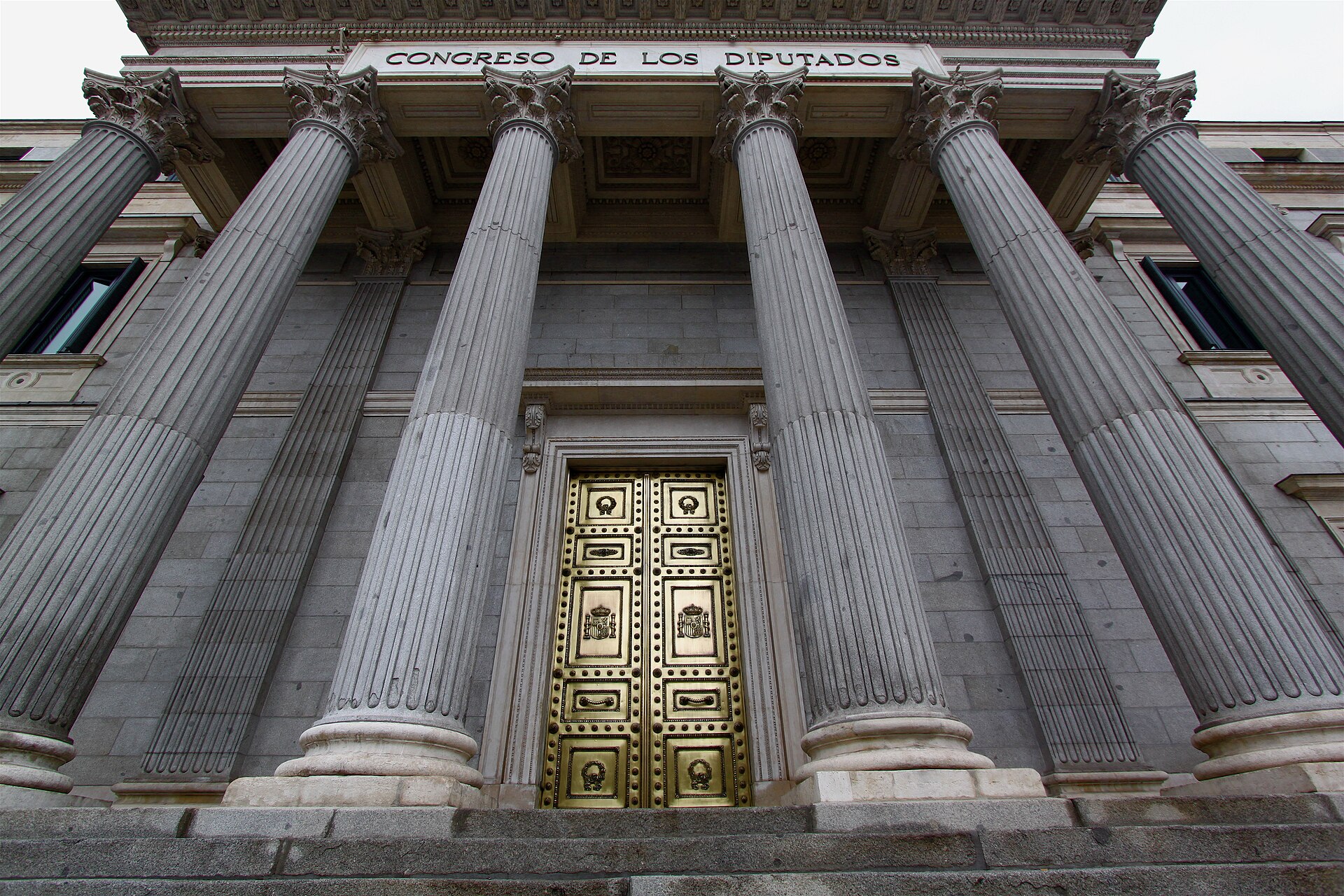
Photo: Roy Luck via Wikimedia Commons (CC BY 2.0). File photo of the Congreso de los Diputados, Spain’s lower house of parliament, in Madrid, 2011.
Sources: CBC News (Reuters); RTÉ News.
This article was produced with AI assistance and is based on reporting from CBC News (Reuters) and RTÉ News.