



COCHISE, Ariz. — Southern Arizona’s last coal-burning power unit, once headed for a coal phase-out next year, is instead getting a top-to-bottom overhaul with help from Washington.
Curt Coccodrilli, acting assistant secretary of the U.S. Department of Energy’s Office of Hydrocarbons and Geothermal Energy, toured the Apache Generating Station in rural Cochise County on Monday, according to KGUN 9 and KOLD 13 News. The same day, the Energy Department released an Arizona fact sheet highlighting more than $21 million in planned federal investment at the plant.
What the money buys
The award — $20,826,000, according to the Energy Department’s project listing — goes to the Arizona Electric Power Cooperative, or AEPCO, for what the agency calls the Steam Turbine 3 Modernization Project. Unit ST3 is a 195-megawatt coal-fired unit. The total project is valued at about $60.55 million, with roughly $39.7 million coming from non-federal sources, the department says.
The selection was first announced in June at a White House event attended by U.S. Rep. Juan Ciscomani, whose district includes the plant, the Herald/Review reported at the time.
Michael Nelson, AEPCO’s executive director of power production, told KGUN the turbine has not had upgrades of this scale in nearly 50 years. He said the work requires extensive engineering and custom-built equipment, and KGUN reported it is expected to be finished by the end of 2030.
“Why would you want to go and build a whole brand-new plant” when a smaller injection of capital can rebuild an existing turbine, Coccodrilli asked, according to KGUN. He told KOLD the goal is to “keep that which can still work, working.”
A reversal on coal
The investment marks a sharp turn for the cooperative. KOLD reported that AEPCO had received federal money less than two years ago to support renewable energy and move away from coal, and had said it would phase out coal at the Apache station by 2027. Now the coal turbine will keep running.
KOLD described the station, south of Willcox and east of Benson, as the last remaining coal plant in southern Arizona and one of three left in the state. AEPCO’s CEO, Patrick Ledger, declined an on-camera interview, but told the station the co-op remains committed to a goal of cutting emissions 70% by 2031 and expects the investment to let it generate more power at lower cost.
It is not yet clear how the project will affect electric rates, KOLD reported. Coccodrilli said any emissions rules that apply as the turbine is upgraded would be up to the U.S. Environmental Protection Agency, which announced last month that it was rolling back greenhouse gas limits for power plants.
Jobs and a shrinking share of the grid
The Energy Department says AEPCO supports 241 regional jobs and about $95.5 million in annual economic output in Cochise County, and that the project would use roughly 52 full-time-equivalent contractor workers in its first phase and 25 in the second.
Coal is a small and shrinking slice of Arizona’s power. Citing the U.S. Energy Information Administration, KOLD reported that coal accounts for about 8% of the state’s energy supply, while natural gas and renewables together make up nearly 65%. Coccodrilli said he does not see coal “being phased out whatsoever.”
After the plant visit, Coccodrilli finished his Arizona stop at the University of Arizona’s San Xavier Mine, where he said training more mining and engineering students is key to expanding domestic production of critical minerals, KGUN reported.
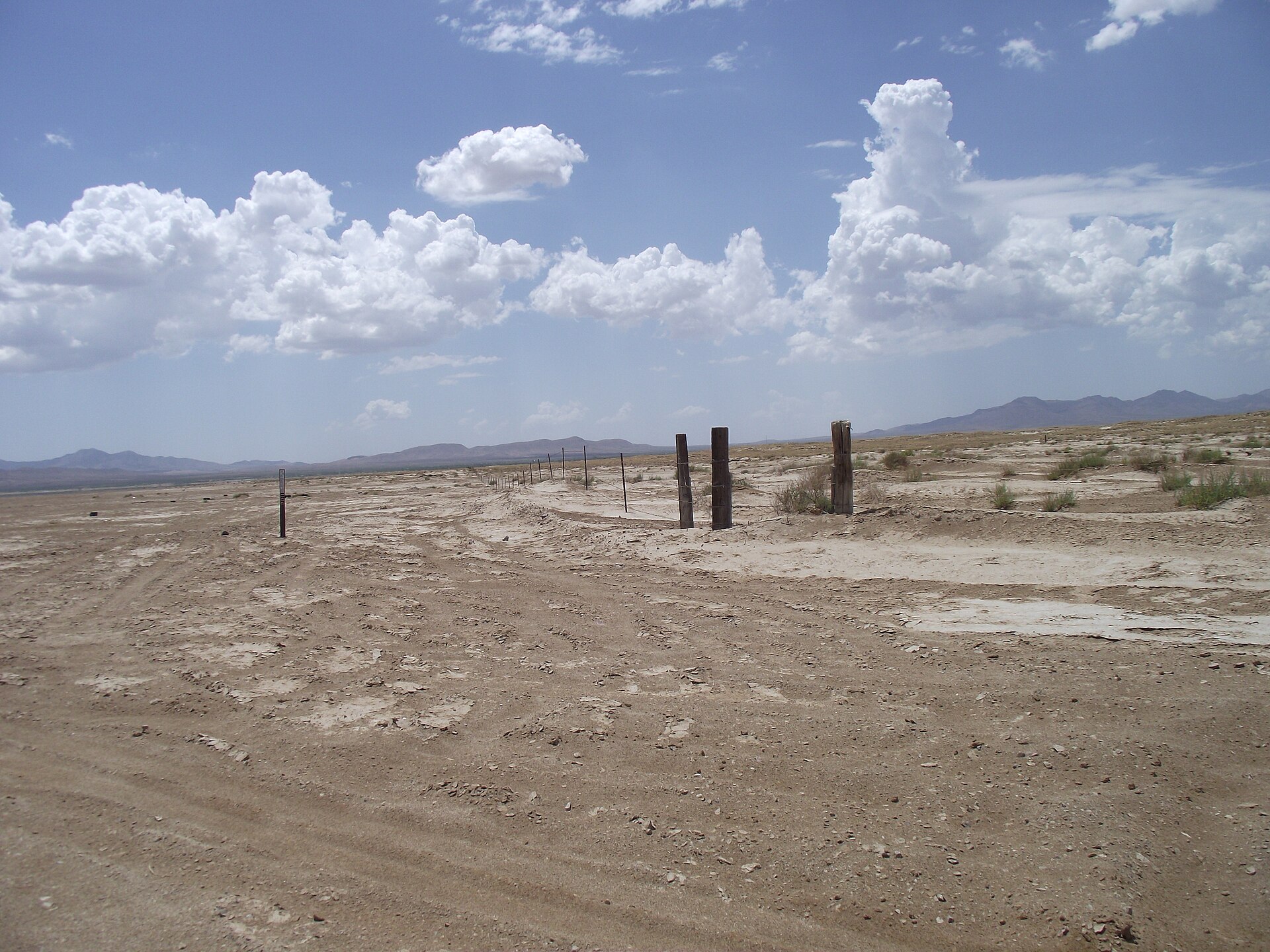
Photo: Bureau of Land Management via Wikimedia Commons (public domain). The Willcox Playa in Cochise County’s Sulphur Springs Valley, the region served by the Apache Generating Station; 2011 file photo.
Sources: KGUN 9; KOLD 13 News; U.S. Department of Energy.
This article was produced with AI assistance and is based on reporting from KGUN 9, KOLD 13 News and U.S. Department of Energy.