





The International Criminal Court on Monday made public four arrest warrants against senior Taliban figures, accusing them of a systematic campaign against women and girls in Afghanistan that amounts to a crime against humanity.
Who is named
In a decision by Pre-Trial Chamber II, the court unsealed warrants for Taliban Supreme Leader Haibatullah Akhundzada and Chief Justice Abdul Hakim Haqqani, as well as for Habibullah Agha and Neda Mohammad Nadim. DW identified Agha as education minister and Nadim as minister of higher education. The warrants were issued July 8 and Sept. 9, 2025; the court had already disclosed that the first two existed, but not their details.
The accusations
The judges found reasonable grounds to believe the four ordered, induced or solicited persecution on gender grounds against girls, women and others who do not conform to the Taliban’s policy on gender, gender identity or expression, and on political grounds against people seen as “allies of girls and women,” according to the ICC. The alleged crimes span from the Taliban takeover on Aug. 15, 2021, until at least Jan. 20, 2025.
The court said Taliban decrees and edicts severely deprived women and girls of rights to education, privacy and family life and of freedoms of movement, expression, thought, conscience and religion, in connection with murder, imprisonment, torture, rape and enforced disappearance. The judges also said “gender” in the court’s founding treaty must be read to include socially constructed roles and norms, not only biological sex, and that persecution can include systemic, institutional harm as well as direct violence.
The Taliban’s response
Taliban chief spokesman Zabihullah Mujahid said the government does not recognize the court’s authority and is bound only by Islamic Sharia and its courts, DW reported. The ICC has no police force of its own, so the warrants depend on member states making arrests if a suspect travels to their territory; still, they are seen as a form of international pressure.
Under Taliban rule, girls are barred from school beyond sixth grade, and women face sweeping limits on work, public spaces, dress and travel without a male relative. When the first two warrants were sought, the ICC prosecutor said applications against other senior Taliban members would follow, UN News noted.
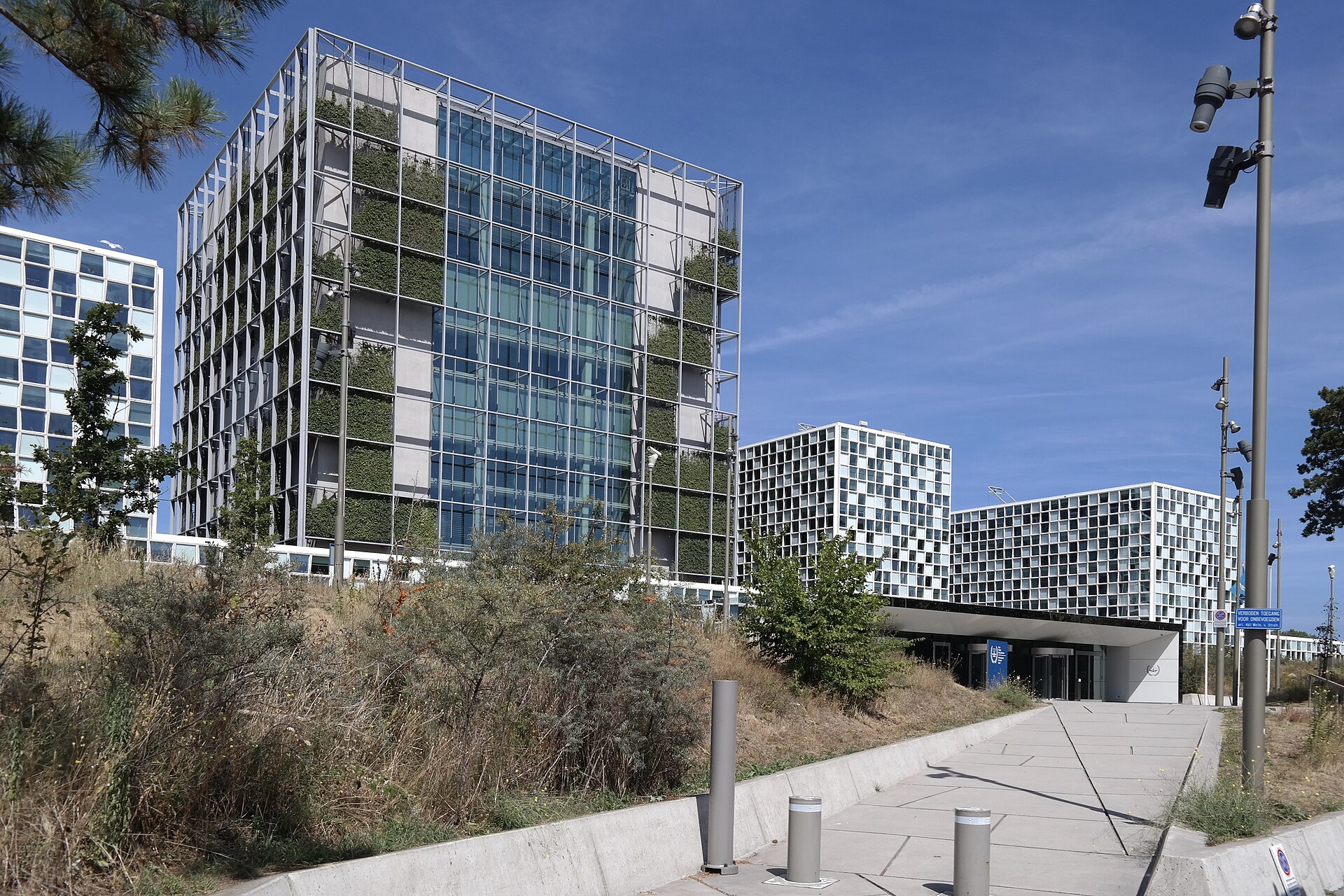
Photo: Choinowski via Wikimedia Commons (CC BY-SA 4.0). File photo of the International Criminal Court in The Hague, 2022.